
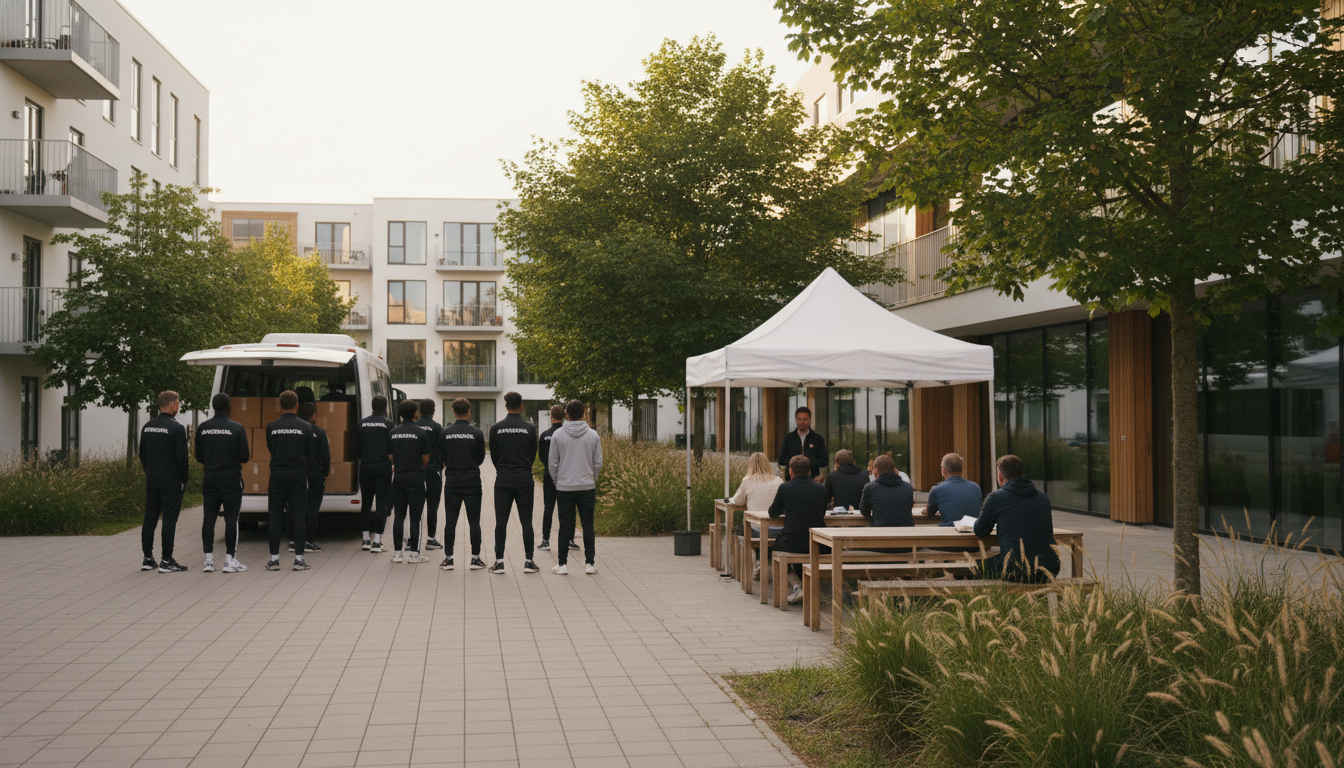
FC Midtjylland has intensified its onboarding program for new arrivals as the first-team squad has become increasingly multicultural. The club’s Head of Scouting Operations, Casper Pedersen, coordinates the process for key players and coaches to ensure smooth transitions on and off the pitch.
With the transfer window now closed, two additions to the first team, Mikael Uhre and Junior Zé, are being integrated through this system. The process starts with medical checks and practical matters such as housing and transport, alongside introductions to staff and support structures designed to help newcomers settle quickly.
The Onboarding Process: A Comprehensive Approach
Pedersen serves as the central coordinator, working across departments so tasks are handled efficiently. Team Manager Anita Hauge leads the administrative side, helping secure documents and approvals linked to moving to Denmark. The club aims to minimize time spent on bureaucracy so players can focus on performing from day one, following a consistent procedure regardless of age or experience.
The approach has grown in importance as the squad now includes nearly 20 nationalities. The club has made onboarding a regular topic internally and even uses it as a point of emphasis when recruiting players. Support is tailored to each individual, with added focus for younger international arrivals. For Spanish-, Portuguese-, and French-speaking players, specialist coach Rodrigo Prieto plays a key role in bridging both football and language, and onboarding is part of his remit.
While the club acknowledges that success is difficult to measure, the objective is a stable, confident start for every newcomer. A recent example is 28-year-old defender Martin Erlić, who joined on August 4, 2025. He moved to Denmark with his fiancée, had limited English at the time, and previously lived in Croatia until age 16 before spending 11 years in Italy.
His onboarding began with building a clear picture of the player and his family. The club considers partners and children part of the process, asking about interests, preferences, and day-to-day habits to create the best conditions for life in Denmark.
Next came the practical setup. The club helped find a home and a car, noting that Danish rentals are often unfurnished, unlike in Italy. Temporary accommodation and transport were arranged to avoid extended hotel stays. Extra support was provided due to the initial language barrier, and the club facilitated furniture shopping in Ikast so the couple could quickly make their new place feel like home.
Team integration followed. Pedersen consulted figures such as Club Captain Jonas Lössl and Sporting Director Kristian Bach Bak on details like locker-room seating to ease the player’s introduction. Off the field, Erlić’s fiancée was invited into a partners’ group that organizes social activities throughout the year.
Language training was a final key step. Erlić enrolled in the club’s English lessons, both in person and online, and became fluent within months. Early communication often ran through his fiancée, but as his language and confidence grew, contact shifted directly to the player.
As newcomers settle into the squad and daily life, the club gradually considers onboarding complete, while keeping support available for any issues that arise. Players frequently turn to Pedersen when they need assistance, which the club sees as a sign that trust has been established.