
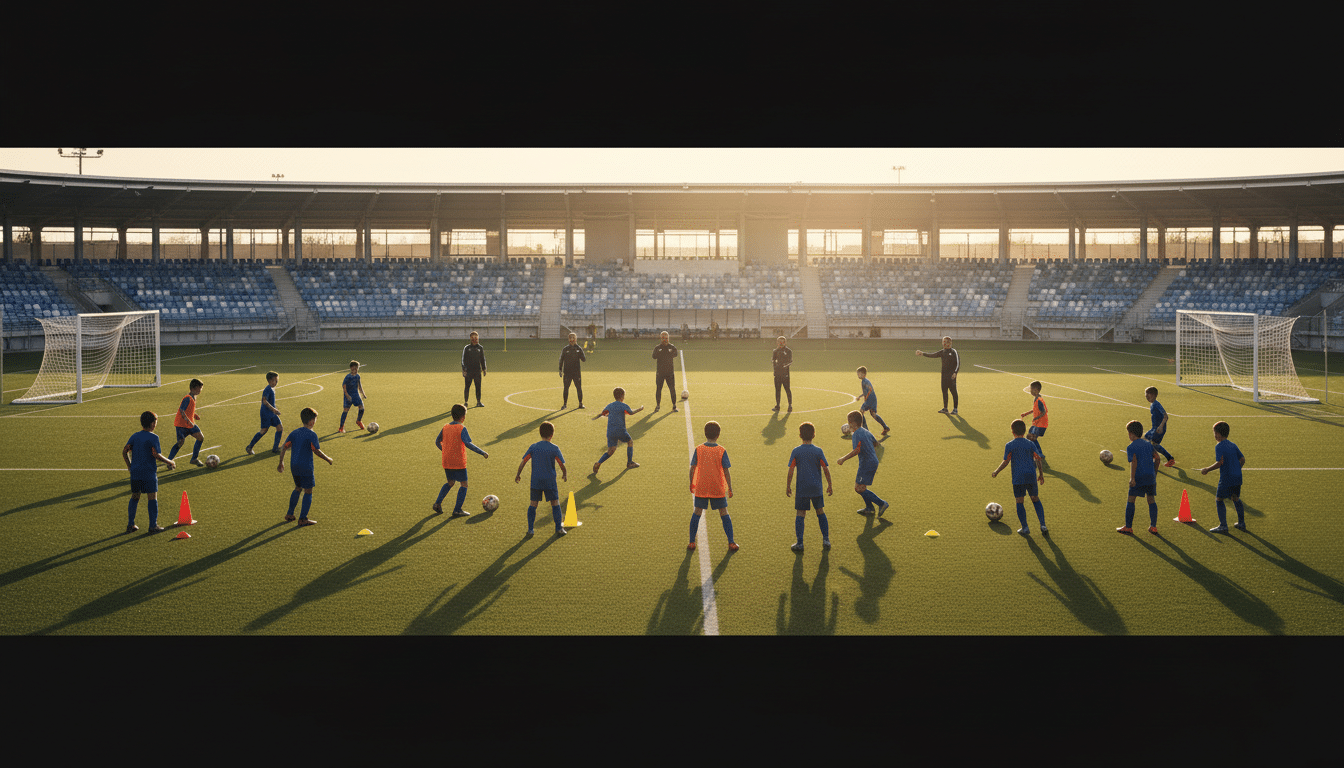
Danish boys’ football development is continuing to gain ground. The Danish Football Association’s Boys Talent Committee has completed its review of applications for the next licensing cycle and awarded talent development licenses to 44 clubs for the 2026–2028 period.
Positive Trends in Danish Youth Football
On-field indicators remain strong. Young players are earning minutes in the top Danish divisions, the under-17 and under-19 national teams have both qualified for this summer’s European Championships, and interest in Danish under-21 players is high.
The committee said the applications reflect broader and better work across clubs. Investments in talent programs are rising, talent environments are improving, and more qualified coaches and leaders are involved, pointing to a positive outlook for the years ahead.
Quality metrics support that view. The number of top-tier talent environments has increased again, with 16 clubs now rated at least 3.5 stars. In total, 28 environments have earned 2.5 stars or more. Progress is not limited to the elite level: 36 of the 44 licensed clubs improved their overall score compared with the previous licensing period.
DBU’s head of boys’ talent development, Kenneth Brogaard, noted that more clubs are trusting academy players with first-team opportunities. He said this benefits the clubs and helps explain why both the under-17 and under-19 sides are among Europe’s top eight heading into the Euros, reflecting the overall quality of talent environments across the country.
A restructured youth competition format will launch on 1 July as the next step. The 32 best-qualified teams will enter a new Youth Danish Championship, split into a 16-team League and a 16-team Division. All 44 licensed clubs will also be offered entry to a new under-16 Cup.
According to Divisionsforeningen talent chief Ole Bjur, the new setup is designed to provide a strong, development-focused competitive landscape, and the organizations will monitor it closely and adjust if needed.
In April, DBU and the committee hosted a seminar with 130 representatives from licensed clubs to start work on a new talent strategy and an updated licensing system. Both are expected to be ready in 2027.
The ranking of clubs holding boys’ youth licenses for 2026–2028 remains subject to appeals and disciplinary matters through 30 June 2026.