
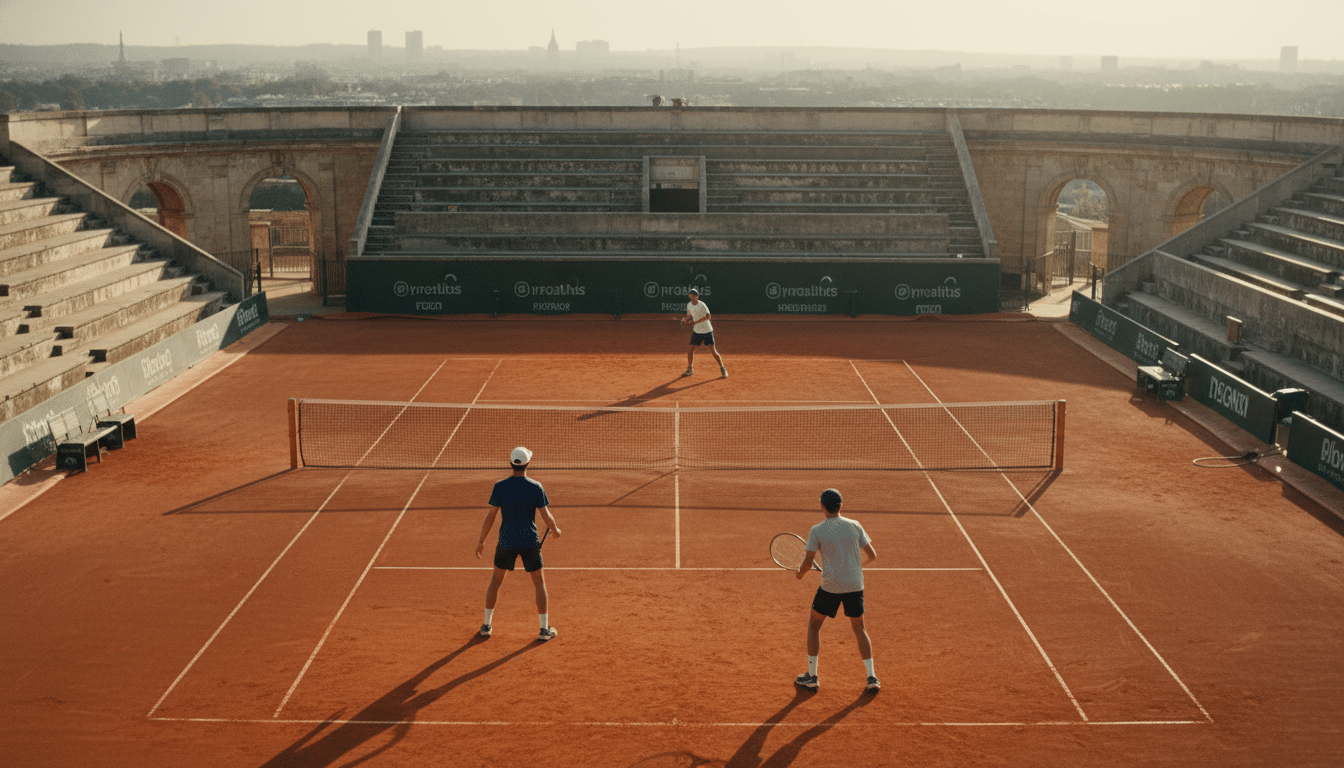
Paris, May 25, 2026 — Spain’s next wave arrives at Roland Garros with three players aged 21 or younger in the men’s main draw, a lineup the country has not had at a Grand Slam since 2005. Rafael Jodar, Martin Landaluce, and Daniel Merida step into a tournament that has long showcased Spain’s clay-court pedigree and often hinted at what comes next.
Spain’s Young Tennis Talent at Roland Garros
The last time Spain fielded a group this young on such a stage, Paris witnessed the start of a defining era. In 2005, five Spaniards aged 21 or under—among them Rafael Nadal, Daniel Gimeno-Traver, Nicolas Almagro, Fernando Verdasco, and Guillermo Garcia-Lopez—entered Roland Garros, a cluster that proved historically significant in hindsight.
Jodar, 19, is the most eye-catching of the current trio. The 2024 US Open boys’ champion has surged in 2026, winning his first tour-level title in Marrakech and making the semifinals in Barcelona along with quarterfinal runs in Madrid and Rome. He opens against Aleksandar Kovacevic.
Landaluce, 20, the 2022 US Open junior winner, has progressed in measured steps and broken through this season. Quarterfinal appearances at the ATP Masters 1000 events in Miami and Rome have carried him to a career-high ranking of No. 67. He begins his Paris campaign against a qualifier or a lucky loser.
Merida, 21, has built his game away from the spotlight, accumulating experience across the tour’s lower tiers—a traditional Spanish pathway grounded in volume, grit, and steady improvement. His first-round assignment is a demanding one against fifth seed Ben Shelton, the type of test that often reveals how well a player handles long clay-court battles.
Taken together, the trio signals more than coincidence. Spain still leans on Carlos Alcaraz as its leading figure, but the presence of multiple young contenders points to renewed depth. Each new generation has faced comparisons to the Nadal-led cohort and, more recently, to Alcaraz’s rise. Jodar, Landaluce, and Merida enter Paris with fewer expectations and a clearer mandate: compete hard, gain experience, and show that Spain’s future does not rest on a single name.
Roland Garros is a fitting measuring stick. Clay rewards patience, resilience, and tactical clarity, qualities that can accelerate development for teenagers and early twenty-somethings. This shared starting point for three young Spaniards may not define an era yet, but it offers a strong indication of where Spanish tennis is heading.