
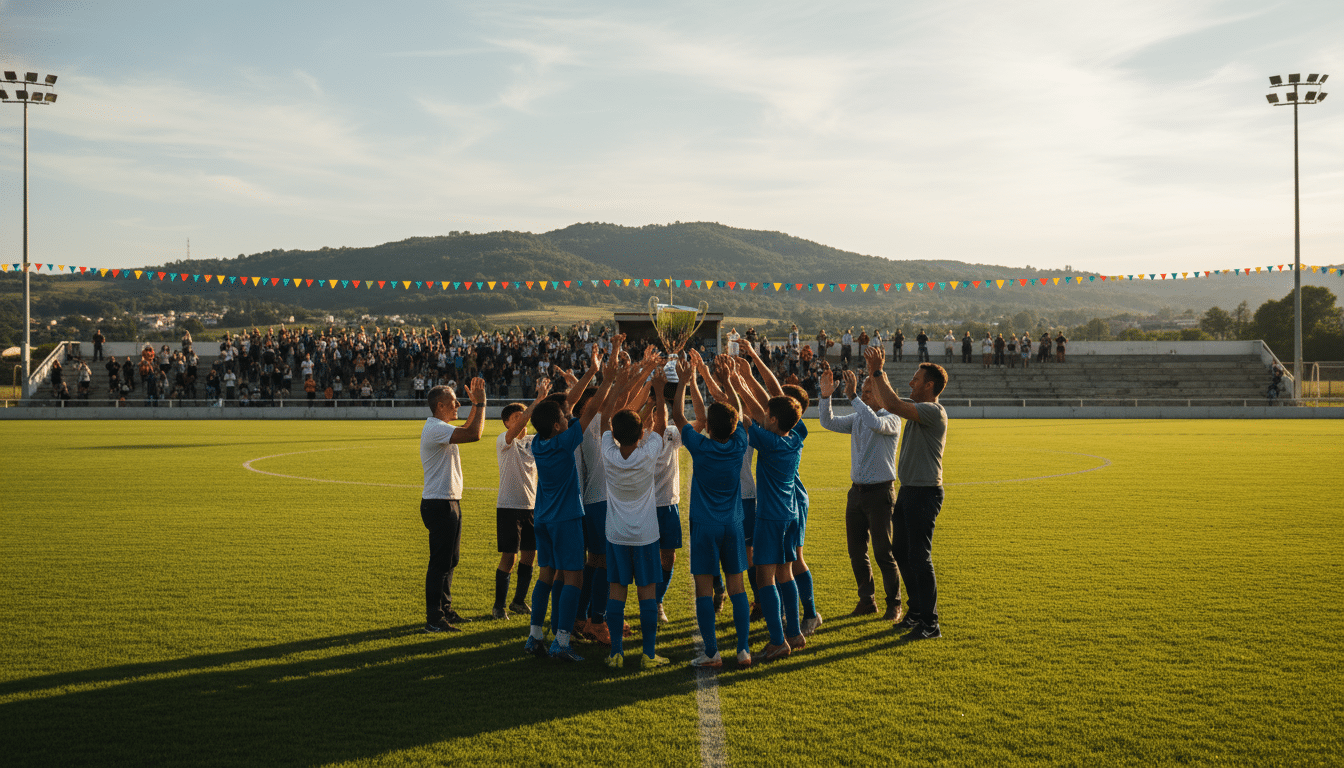
On a tournament day at Vordingborg IF, football served a purpose beyond the scoreboard. The pitches hosted eight teams, including local sides and visitors from other initiatives, as part of a program that uses the sport to help young people move toward education and work.
Empowering Youth Through Football
In Vordingborg Municipality, youth guide Frank Knudsen leads the local arm of Football for the Future. The approach is simple: bring participants together around football, build trust through shared activity, and use that connection to chart next steps in life. Players train twice a week, and the sessions are paired with one‑to‑one conversations where goals and timelines are set. Being on the field together helps open more honest, practical discussions about ambitions and barriers.
Knudsen, a lifelong resident of the area, draws on his local network to line up jobs and internships. He focuses on matching each participant with a workplace where they are likely to succeed, and he reports strong backing from local businesses. The project’s outcomes reflect that support: roughly half of those who take part move on to employment or education.
The tournament itself brought together a mix of teams. Alongside Football for the Future squads, including a team from Vejen that traveled from Jutland, there were players from the Inclusion in Football Denmark initiative (Ombold), a team of advisers from Vordingborg Municipality, and a side from FGU South and West Zealand, a partner in the program.
Young participants helped run the event. Fifteen‑year‑old Mads Arth and 21‑year‑olds Kristian Bonde and Sune Brogaard were among those who handled practical tasks such as sorting out food and arranging medals. The organizing work is part of the wider aim to build confidence, responsibility, and a sense of belonging.
Several of the players are already mapping out next steps. Bonde has been in the program for about six months and wants a career in the service sector; he has started with a part‑time job as a waiter and hopes to build on it. Brogaard is considering a skilled trade, such as groundworker or carpenter, and values the staff’s local contacts, which he says can open doors. He also points to progress off the ball, feeling he has become a more considerate teammate.
As the matches wrapped up, Vordingborg’s mayor, Michael Seiding Larsen, and DBU Zealand’s chair, Jakob Koed, presented medals and a trophy. Teams then gathered for a post‑tournament barbecue before heading home. For the organizers, days like this are about more than sport; the goal is to help young people toward a meaningful daily life and a stable future.
Football for the Future began in 2020 as an employment initiative for young people not in work or education. During its first phase from 2020 to 2024, 14 municipalities and 14 local clubs took part, and more than 450 participants completed a course; 53 percent progressed into jobs or education. The current phase runs until August 2027, with plans to involve more rural and outlying municipalities. The program develops new methods in partnership with municipal youth services, FGU institutions, and local football clubs, and is funded by the VELUX FOUNDATION.