
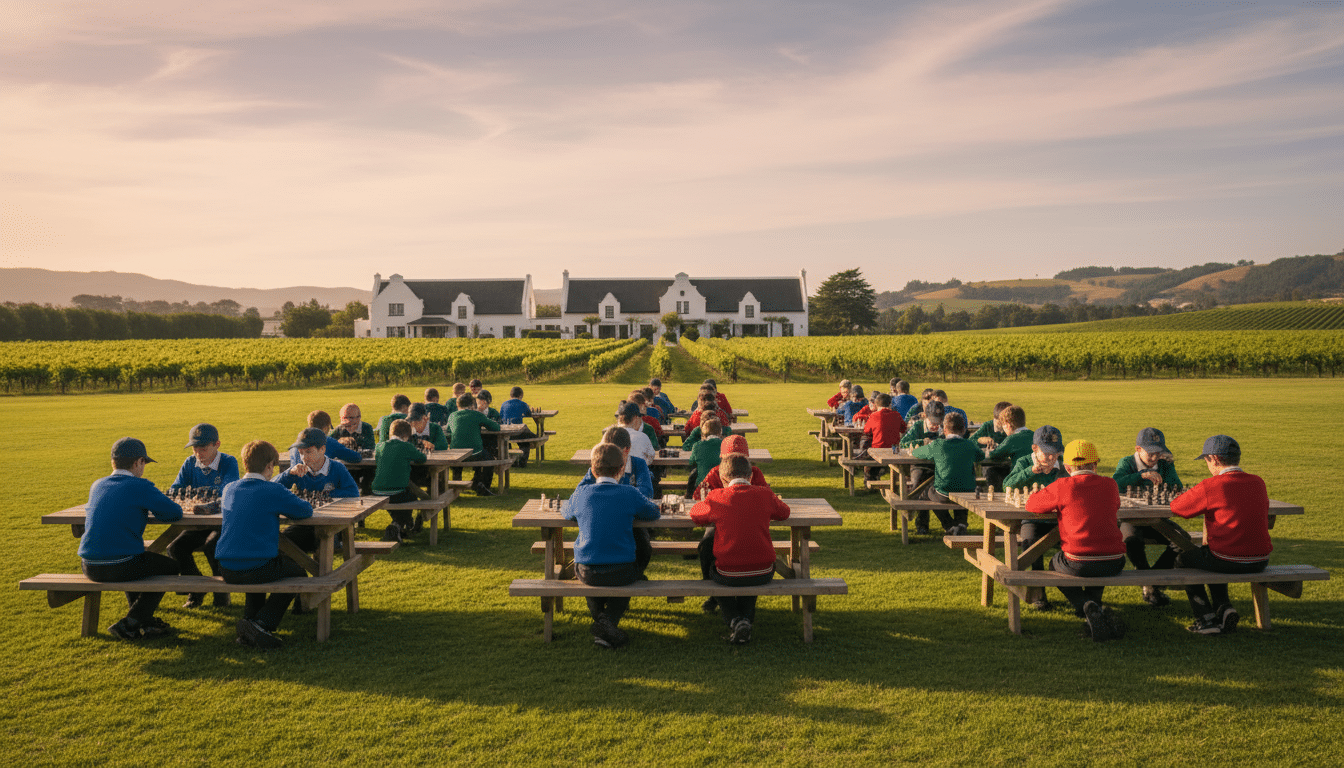
The FIDE ISCF World Schools Team Championship has quickly grown from a pilot event in Aktau in 2023 into a global series spanning four continents. During the African Continental Stage in Stellenbosch, South Africa, ISCF President Timur Turlov described how the competition has expanded and how school-based team chess is building a wider community around the game.
Building a Global Community Through Team Chess
According to Turlov, the project set out to create a strong international competition for schools, and its team format is central to that goal. While chess is played individually at the board, the school team model encourages collaboration, mutual support, and a sense of shared purpose. He said teams help young players learn to rely on one another and create more opportunities for development across entire schools, not just for standout individuals.
Turlov noted that the championship has become a place where students from different countries make friends and discover new cultures. He emphasized that the team structure provides resilience, as players can support each other through preparation, encouragement, and performance across multiple boards.
With FIDE naming 2026 the Year of Chess in Education, Turlov outlined a vision that treats chess as an affordable and accessible tool for schools. He pointed to benefits beyond the game itself, including improved learning habits, stronger concentration, better strategic thinking, and more deliberate decision-making—skills he considers especially valuable in a fast-paced digital environment.
ISCF has also launched a Chess in Education grant program designed to widen access. Turlov said the grants aim to help new initiatives take root, with the expectation that national federations can sustain successful projects after the initial funding ends once they see measurable impact.
Reflecting on his tenure, Turlov highlighted the creation of a large organizing team and close cooperation with FIDE, national federations, and government partners. He noted that thousands of young players from around the world are already involved, underscoring the momentum behind the championship and its education-focused efforts. This growing movement not only promotes chess as a competitive sport but also fosters essential life skills among students.