
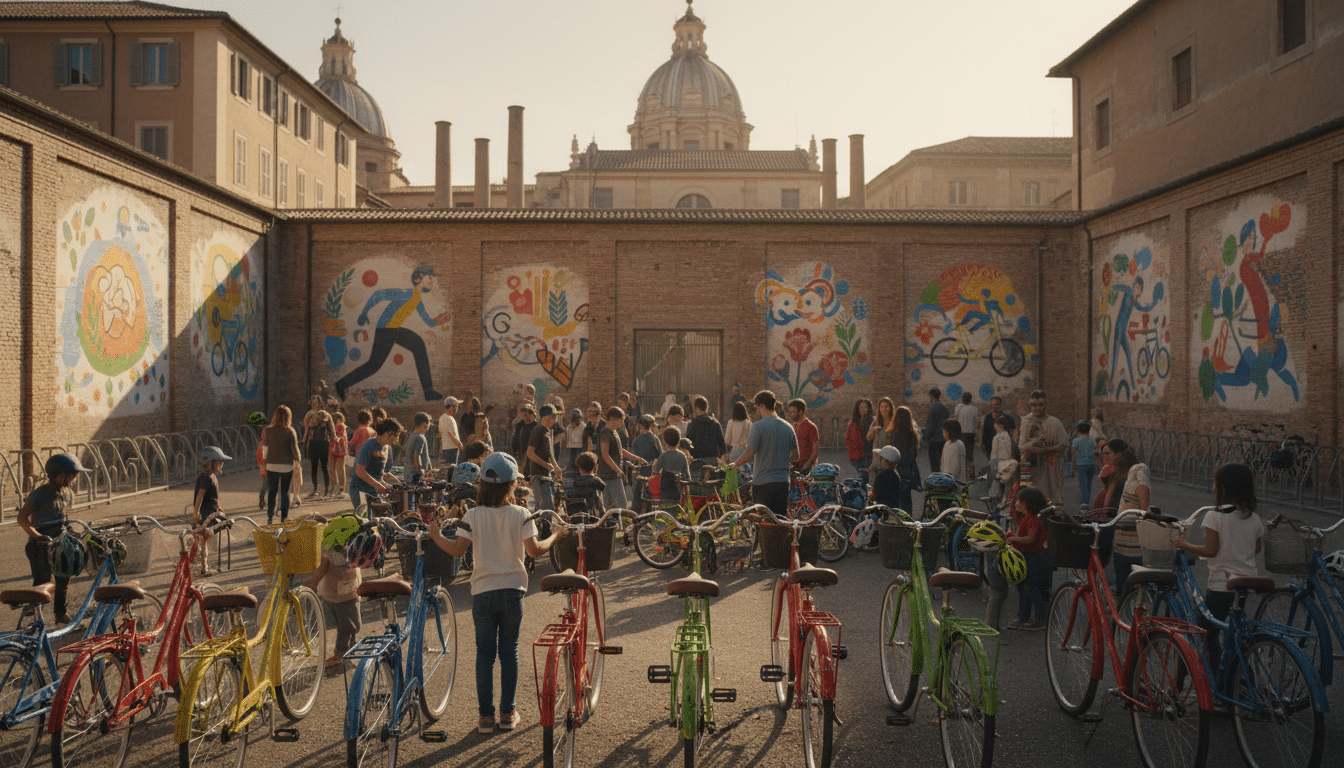
A new social initiative tied to the Giro d’Italia is shifting the race’s legacy in Rome from urban art to everyday support for people in need. RCS Sports & Events, Roma Capitale, and ACLI have launched a program to donate 35 bicycles to children, families, and others in vulnerable situations, using sport as a tool for inclusion and sustainable mobility.
Bicycle Donations for a Brighter Future
An initial handover of 11 bikes was held at the San Giuseppe Protection Centre, an ACLI Roma affiliate, attended by city and project representatives, including Roma Capitale’s councillor for major events, an executive from RCS Sports & Events, and ACLI Roma’s vice president.
The bicycles will be assigned to children cared for at Casa Pollicino, which supports minors awaiting foster care or adoption, and to families at Giardino di Pace, a facility for mothers and their children.
Further donations are planned across the city:
- 3 bicycles to Casa Rifugio Agar, a shelter for refugee women and women who have survived violence, along with their children
- 4 bicycles to Casa Accoglienza Riparte, part of the Sette Soli Per network, to help young people leaving residential care travel to work
- 7 bicycles to the Basilica of Saint Sophia for Ukrainian children living in Italy and for children who remain in Ukraine
The bicycles were purchased from Rossignoli, a historic Milan retailer, and the protective helmets were provided by Decathlon, reflecting cooperation among public institutions, private companies, and third-sector organizations.
City officials said major events in Rome are meant to deliver benefits that extend beyond tourism and economic impact, with ongoing deliveries planned for additional family homes. Organizers described the donation as part of a long-term legacy that aims to create opportunities for children and families facing hardship. Decathlon noted that its participation supports broader access to physical activity. ACLI Roma emphasized that directing the bikes to frontline organizations can foster freedom, independence, and social inclusion, and said the effort shows how coordinated action can strengthen the community.
This initiative not only enhances the legacy of the Giro d’Italia but also promotes a sustainable approach to mobility, ensuring that those in need have the tools for a brighter future.