
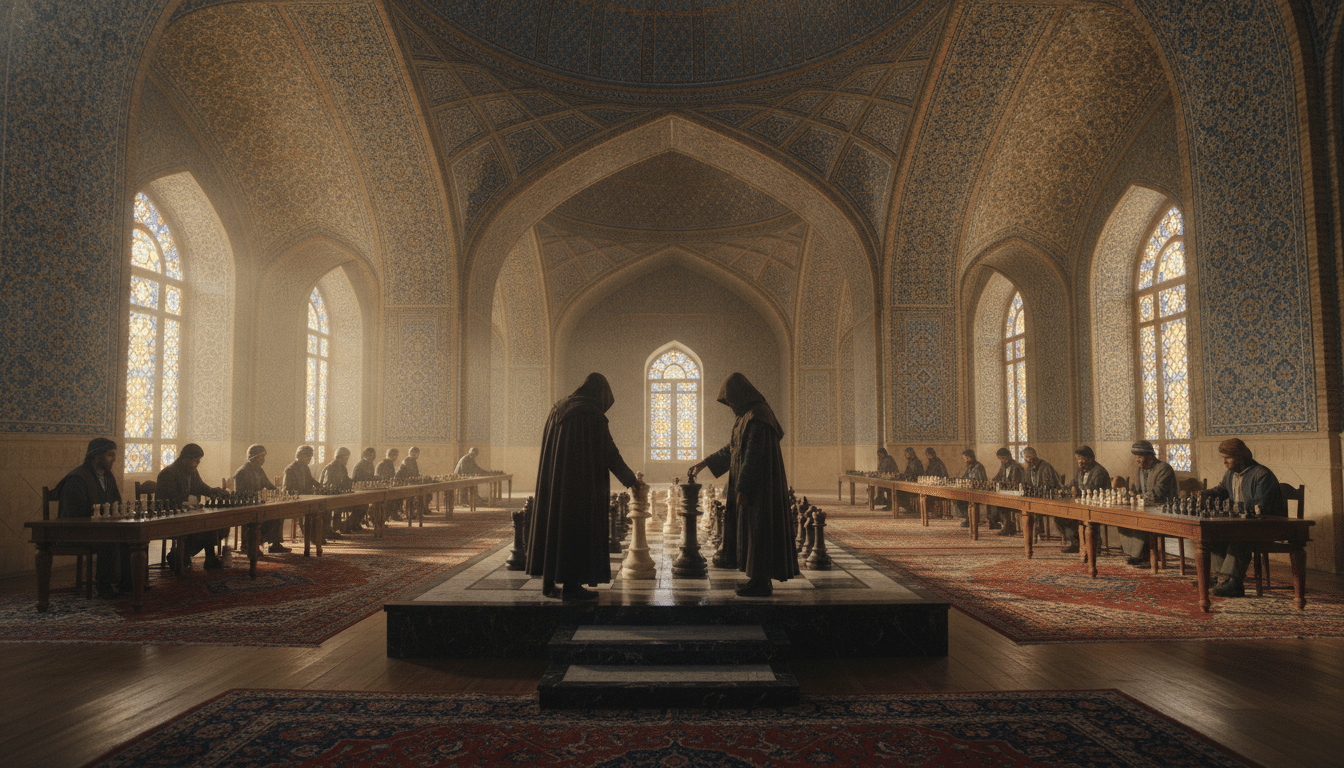
Round 2 of the third FIDE Chess Olympiad for People with Disabilities delivered another intense day in Samarkand, with eight teams preserving perfect records and setting up head-to-head meetings among all the leaders in the next round.
The day opened with a ceremonial first move made by Thomas Luether, who chairs FIDE’s Commission for Players with Disabilities and the event’s Appeals Committee, alongside Khusen Mirzaevich Tukhtaev, the Samarkand region’s deputy governor for youth policy, social development, and spiritual and educational affairs.
Exciting Matches and Standout Performances
Several contenders won convincingly. Cuba beat Serbia 3–1, and Israel defeated Ukraine by the same score. IBCA overwhelmed Switzerland 3½–½, while Germany overcame Kazakhstan 3–1. The Philippines continued strongly with a 3–1 win over Hungary, and the Czech Republic handled Kyrgyzstan 3–1. India produced one of the biggest margins among the leaders, topping Uzbekistan 3 by 3½–½, and Argentina beat Spain 3–1.
After two rounds, the Philippines, Cuba, Israel, Argentina, the Czech Republic, IBCA, India, and Germany share first place on four match points. The standings will tighten quickly in Round 3 as these eight teams meet across the top four boards: the Philippines face Cuba on Board 1, Israel plays Argentina on Board 2, the Czech Republic meets IBCA on Board 3, and India takes on Germany on Board 4. The Philippines, Cuba, and Israel also lead on game points with 6½ from their opening matches.
Beyond the scoreboard, the event continued to spotlight the people and stories behind the pieces. Egypt’s Lila Mohamed Amin, who learned the game as a young child and comes from a chess-focused family, described how the sport shapes the way she tackles challenges and keeps her attention on the board rather than on physical difficulties. Egypt enjoyed a perfect team result on the day, defeating Kenya 4–0. She is also experiencing the unique atmosphere of sharing a host city and dates with the main Chess Olympiad, and is eager to be around many of the world’s top players.
Argentina’s Santiago Jose Curia celebrated a 3–1 team win over Spain and another step in his squad’s flawless start. He is pleased to represent his country, is discovering Samarkand’s history and beauty on his first visit to Uzbekistan, and traces his chess roots to lessons from his father and early club play that helped shape many of his life choices. Argentina’s immediate challenge is a Round 3 meeting with Israel on Board 2.
Chile’s Cristian Gonzalez Astete, whose team beat Panama 3–1, emphasized the significance of bringing together players with different types of disabilities in the same competition, noting that the shared experience fosters inclusion. He welcomed the fact that this Olympiad runs alongside the main Chess Olympiad in the same city, seeing it as a meaningful step toward equality. A multi-sport athlete who also competes in table tennis at a high level, he learned chess in early adolescence and considers the game a constant companion through different stages of his life.
With eight teams still perfect and direct clashes now set among all the leaders, Round 3 is poised to reshape the top of the table. Just as notably, the tournament is underscoring how chess connects people across abilities and backgrounds—turning Samarkand into a gathering place for competition, shared experiences, and a lasting passion for the game.