
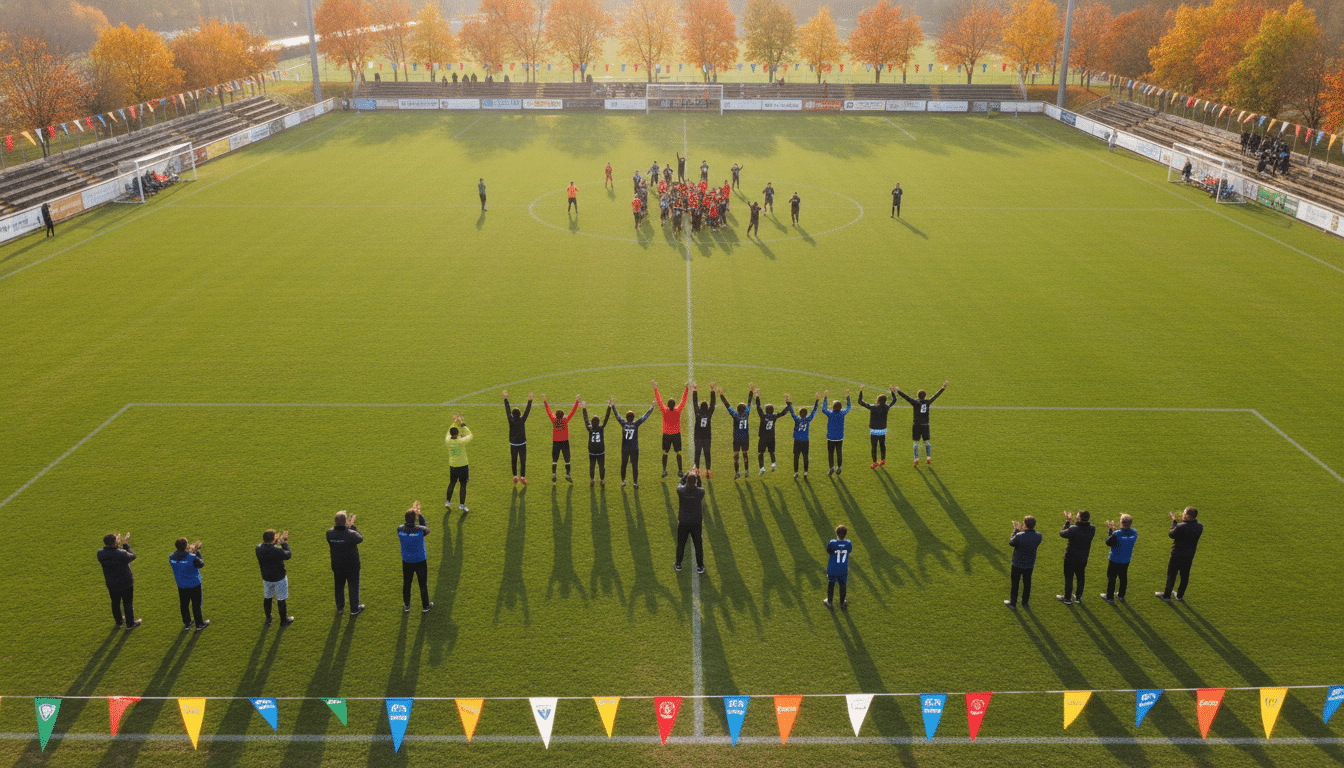
On a pitch in Vordingborg, football is being used to help young people take the next step into education and work. Youth guide Frank Knudsen leads the local arm of Football for the Future at Vordingborg IF, using the club environment to build trust, set goals, and create a daily routine that feels meaningful.
Empowering Youth Through Football
Participants train twice a week. Around those sessions, Knudsen holds one-to-one meetings where ambitions are discussed, targets are set, and deadlines agreed. Being together on the field strengthens relationships, which in turn makes it easier to talk about what each young person wants and how to get there.
Knudsen has lived in the area all his life and draws on a wide local network to open doors to jobs and placements. He matches young people with workplaces where he believes they will succeed and says businesses in the community regularly step up. In Vordingborg, about half of those taking part move on to work or education, and he would like to see even more young people join the program.
That approach was on show at a tournament hosted by Vordingborg IF, where eight teams competed. Lineups included squads from other Football for the Future groups such as a team from Vejen that traveled from Jutland the same morning, a team from the Inclusion in Football Denmark initiative (Ombold), a side made up of counselors from Vordingborg Municipality, and a team from FGU South and West Zealand, a project partner. Participants Mads Arth, 15, Kristian Bonde, 21, and Sune Brogaard, 21, also helped organize the event, arranging food and medals.
The program is shaping future plans. Bonde aims for a career in the service industry and has already started a part-time job as a waiter. Brogaard hopes to enter a trade such as groundwork or carpentry and values the staff’s connections when seeking jobs or internships. He says the project has improved both his football and his ability to work with others.
As the tournament wrapped up, Vordingborg Mayor Michael Seiding Larsen and DBU Zealand chair Jakob Koed presented medals and a trophy, and the day ended with a barbecue. For Knudsen and his colleagues, the goal is simple: helping young people build a stable, fulfilling everyday life.
Football for the Future began in 2020 as an employment initiative for young people not in education or work. In its first phase from 2020 to 2024, 14 municipalities and 14 local clubs took part, more than 450 participants completed a pathway, and 53 percent moved on to jobs or education. The current phase runs until August 2027, with an ambition to bring in more rural and outlying municipalities. The project develops new methods in partnership with municipal youth services, FGU institutions, and local football clubs, and is supported by the VELUX FONDEN.