
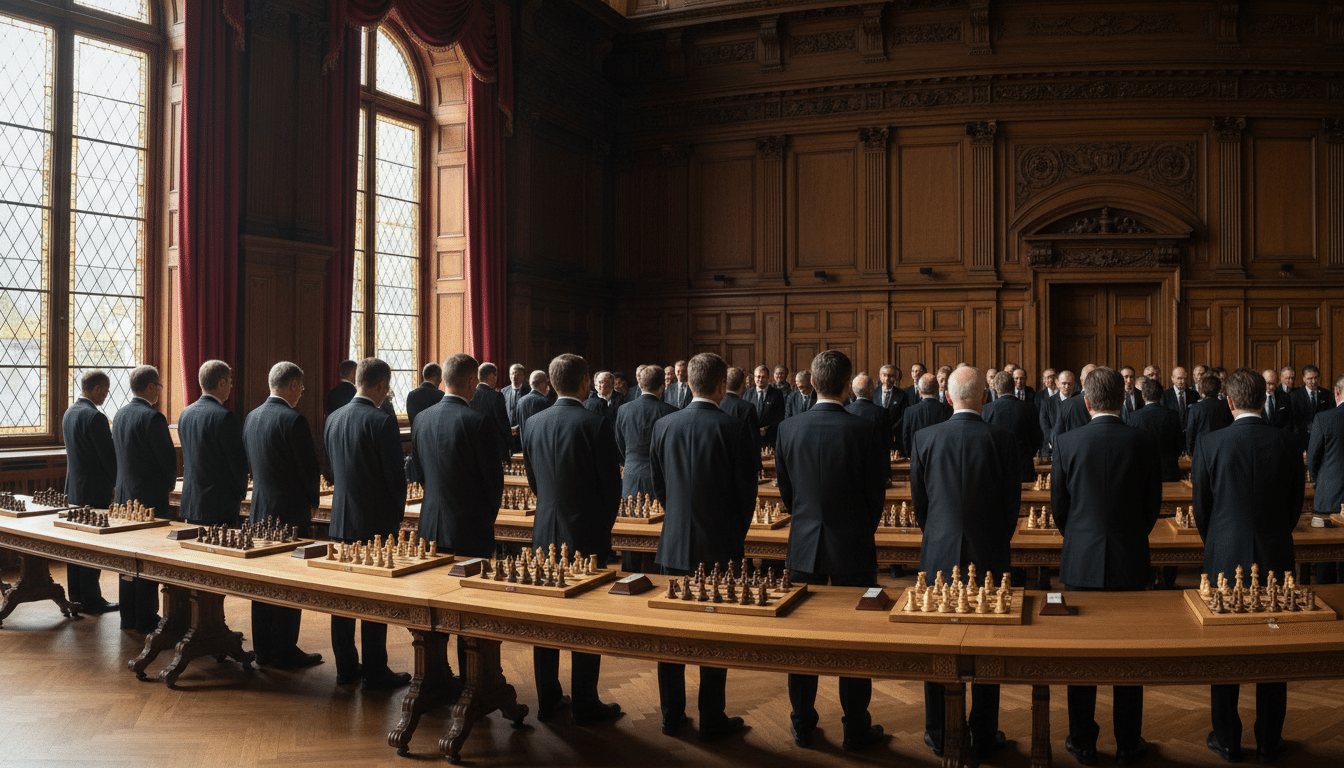
The chess community is mourning the death of Estonian Honorary Grandmaster Iivo Nei, who has died at the age of 94.
Nei was born on October 31, 1931, in Tartu, Estonia, and built a career that stretched across more than eight decades. He showed early promise by sharing first place at the Soviet Union Junior Championship in 1948.
A Legacy of Excellence in Chess
He became an eight-time Estonian champion, taking national titles in 1951, 1952, 1956, 1960, 1961, 1962, 1971, and 1974. He also won the Baltic Republics Championships in four consecutive years from 1961 to 1964, with events held in Palanga, Tartu, and Pärnu, and he played in the Soviet Championships on four occasions.
Nei earned the International Master title in 1964. That same year, he shared first place at the Hoogovens tournament in Beverwijk, finishing ahead of several leading grandmasters of the era. He posted further strong international results, including fifth place at Beverwijk in 1966, joint fourth to sixth in Zinnowitz in 1966, and a shared second to third in Tallinn in 1969.
In February 2024, the FIDE Council recognized his long record of top-level performances from the 1950s through the 1970s by awarding him the title of Honorary Grandmaster.
Nei’s influence extended well beyond his own results. He coached Women’s World Champions Nona Gaprindashvili and Maia Chiburdanidze, served on Boris Spassky’s team during the 1972 World Championship match against Bobby Fischer in Reykjavik, and co-authored the book Both Sides of the Chessboard with American grandmaster Robert Byrne, offering an inside view of that historic contest.
For more than a quarter century, he was a leading chess coach in Estonia, guiding generations of talented players. He also represented Estonia, Latvia, and Lithuania for many years as FIDE’s Zone 1.7 delegate.
Through his writing, commentary, and teaching, Nei helped connect the Soviet chess school with the wider world, encouraging cooperation even during the Cold War.
FIDE and the global chess community express condolences to his family, friends, and the Estonian Chess Federation. His legacy will be remembered for years to come, inspiring future generations of chess enthusiasts.