Cricket may have the richest vocabulary of any sport. A batter can make a “duck”, a bowler can bowl a “maiden”, and a fielder can stand at “silly mid-off”. To a newcomer it sounds like a secret language.
This glossary explains more than 60 of the cricket terms you’ll hear most often on TV and in match reports. If you’re completely new to the game, start with our beginner’s guide to how cricket works.
Batting terms
- Boundary: the rope around the edge of the field, and a shot that reaches it. Four runs if the ball bounces first, six if it doesn’t.
- Century (hundred): 100 runs by one batter in an innings.
- Cover drive: an elegant shot hit through the off side, between point and mid-off.
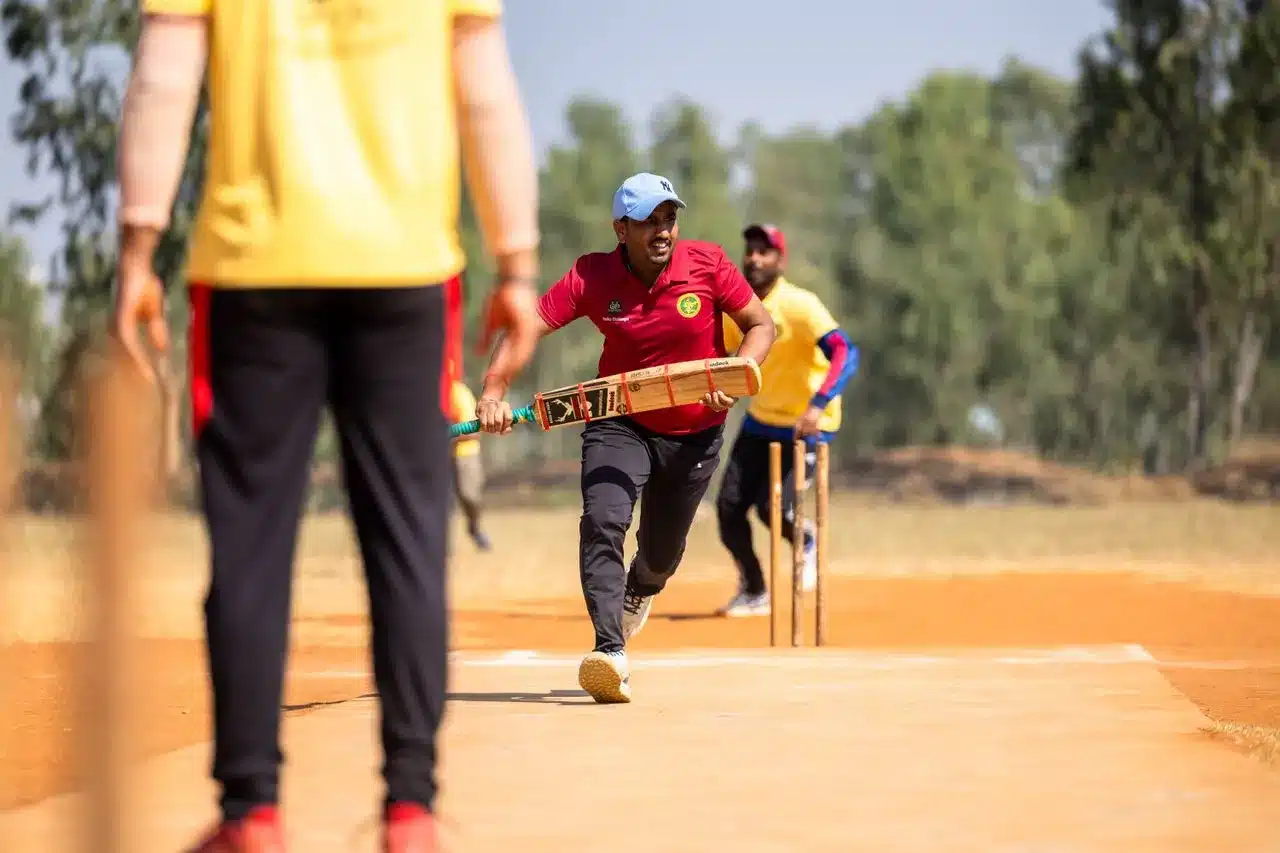
- Crease: the white lines at each end of the pitch. A batter behind the popping crease is “in their ground” and safe.
- Duck: being out without scoring. A golden duck is out first ball.
- Edge (nick): when the ball clips the edge of the bat, often flying to the wicketkeeper or slips.
- Fifty (half-century): 50 runs by one batter in an innings.
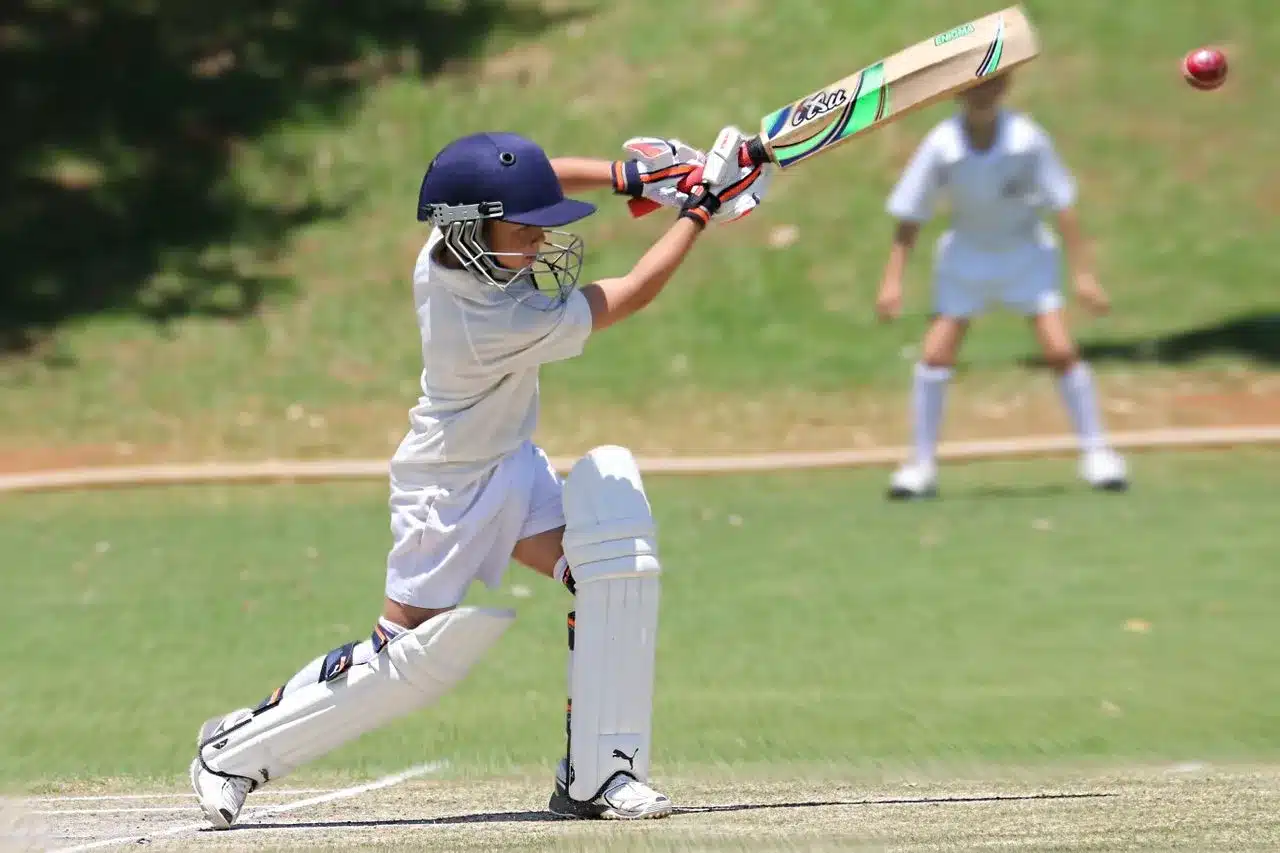
- Hook / pull: shots played across the line to a short ball, hitting it to the leg side.
- Innings: a team’s (or a batter’s) turn to bat.
- Leave: deliberately not playing at a ball outside the off stump.
- Nightwatchman: a lower-order batter sent in late in the day to protect a better batter’s wicket overnight.
- Not out: a batter still in when the innings ends.
- Opener: one of the two batters who start the innings.
- Partnership: the runs scored by two batters while batting together.
- Run rate: the average number of runs scored per over.
- Sweep: a shot played on one knee, sweeping the ball to the leg side.
- Strike rate (batting): runs scored per 100 balls faced. Crucial in T20.
- Tail (tail-enders): the lower-order batters, usually the team’s bowlers.
Bowling terms
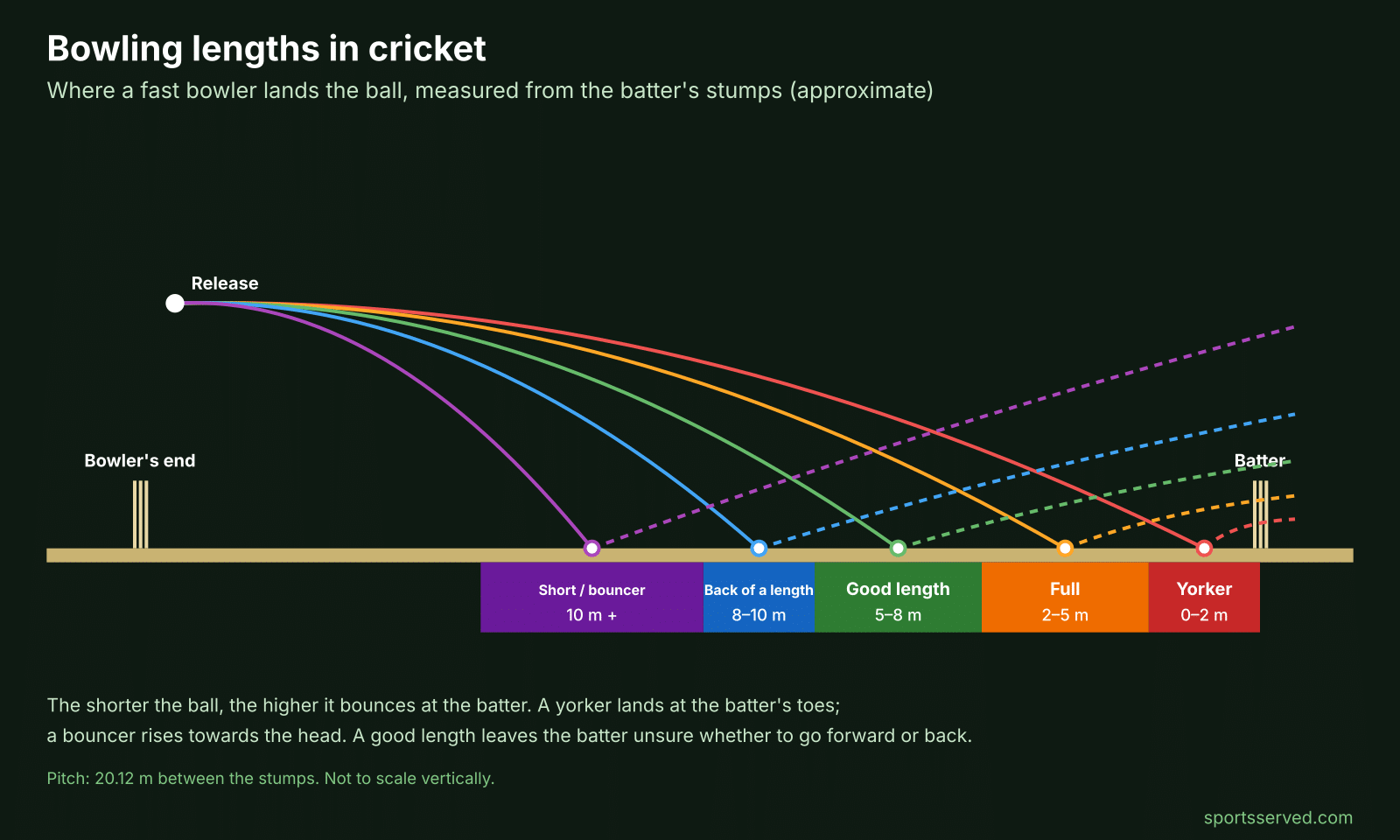
- Bouncer: a short, fast ball that rises towards the batter’s head or chest.
- Doosra: an off-spinner’s delivery that turns the “wrong” way, away from a right-handed batter.
- Economy rate: the average number of runs a bowler concedes per over.
- Five-for (five-wicket haul): five wickets by one bowler in an innings.
- Full toss: a ball that reaches the batter without bouncing.
- Good length: the ideal spot to land the ball, where the batter is unsure whether to play forward or back.
- Googly (wrong’un): a leg-spinner’s delivery that turns the opposite way to normal, into a right-handed batter.
- Hat-trick: three wickets in three consecutive balls by the same bowler.
- Leg spin: spin bowling where the ball turns from leg to off for a right-handed batter, using the wrist.
- Maiden (maiden over): an over in which no runs are scored off the bowler.
- No-ball: an illegal delivery, usually when the bowler oversteps the crease. It costs a run, and in limited-overs cricket the next ball is a free hit.
- Off spin: finger spin that turns the ball from off to leg for a right-handed batter.
- Over: six legal deliveries bowled by one bowler.
- Pace (seam) bowler: a fast bowler who relies on speed and movement off the seam.
- Reverse swing: swing in the opposite direction to normal, achieved with an older, scuffed ball.
- Seam: the raised stitching around the ball. Landing on it can make the ball deviate.
- Swing: sideways movement of the ball through the air.
- Wide: a ball too far from the batter to hit. It costs a run and must be bowled again.
- Yorker: a full ball aimed at the batter’s toes, landing at the base of the stumps.
Fielding terms
- Catch: catching a hit ball before it touches the ground. The batter is out.
- Close fielder: a fielder standing very near the batter, such as silly point or short leg.
- Dropped catch: a catch that goes down. The batter has been “dropped” and gets a reprieve.
- Gully: a fielding position on the off side, between the slips and point.
- Run out: breaking the stumps while a running batter is out of their ground.
- Slips: fielders standing next to the wicketkeeper on the off side, waiting for edges.
- Stumping: when the wicketkeeper breaks the stumps while the batter has stepped out of their ground.
- Wicketkeeper: the gloved fielder who stands behind the stumps.
Match and scoring terms
- All out: when 10 of the 11 batters have been dismissed.
- Declaration: in Test cricket, when a captain ends their team’s innings early to give the bowlers more time.
- DRS (Decision Review System): the technology that lets players challenge an umpire’s decision using replays, ball-tracking and edge detection.
- Extras: runs not scored off the bat: wides, no-balls, byes and leg byes.
- Bye / leg bye: runs taken when the ball passes the batter without touching the bat (a bye) or after hitting the body (a leg bye).
- Follow-on: in Test cricket, when a team that is far behind after the first innings is made to bat again straight away.
- LBW (leg before wicket): out because the ball would have hit the stumps but was stopped by the batter’s leg or body.
- Powerplay: a set of overs in limited-overs cricket when only a few fielders may stand outside the inner circle.
- Super Over: a one-over-per-side eliminator used to break a tie in limited-overs matches.
- Test match: the longest format: up to five days, two innings per team.
- Toss: the coin toss before the match. The winning captain chooses to bat or bowl first.
- Umpire: the on-field officials. There are two on the field, plus a third (TV) umpire.
- Wicket: confusingly, three things: the set of stumps and bails, the pitch itself, and a dismissal (“he took three wickets”).
Slang and fun terms
- Cherry: the new ball.
- Dibbly-dobbly: gentle medium-pace bowling.
- Jaffa: an unplayable delivery.
- Pair: a duck in both innings of a Test match. A king pair is out first ball in both.
- Sledging: verbal taunting of opponents to unsettle them.
- Tonk: a big, agricultural hit.
FAQ
What is a duck in cricket?
When a batter is out without scoring a run. Out first ball is a golden duck.
What is a maiden over?
An over of six legal balls in which the batter scores no runs off the bowler.
What is the difference between a googly and a leg break?
Both are bowled by a leg-spinner, but they turn in opposite directions. A leg break turns away from a right-handed batter; a googly turns into them.
What is a yorker?
A full delivery aimed at the batter’s feet, landing right at the base of the stumps. It is very hard to hit.
Why is it called a “wicket”?
The word originally meant a small gate, which the early two-stump wickets resembled. Today it means the stumps, the pitch, or a dismissal.